

 Español
 Hrvatska
 Latviešu
 Nederlands
 Polski
 Română
 Українська
 Pусский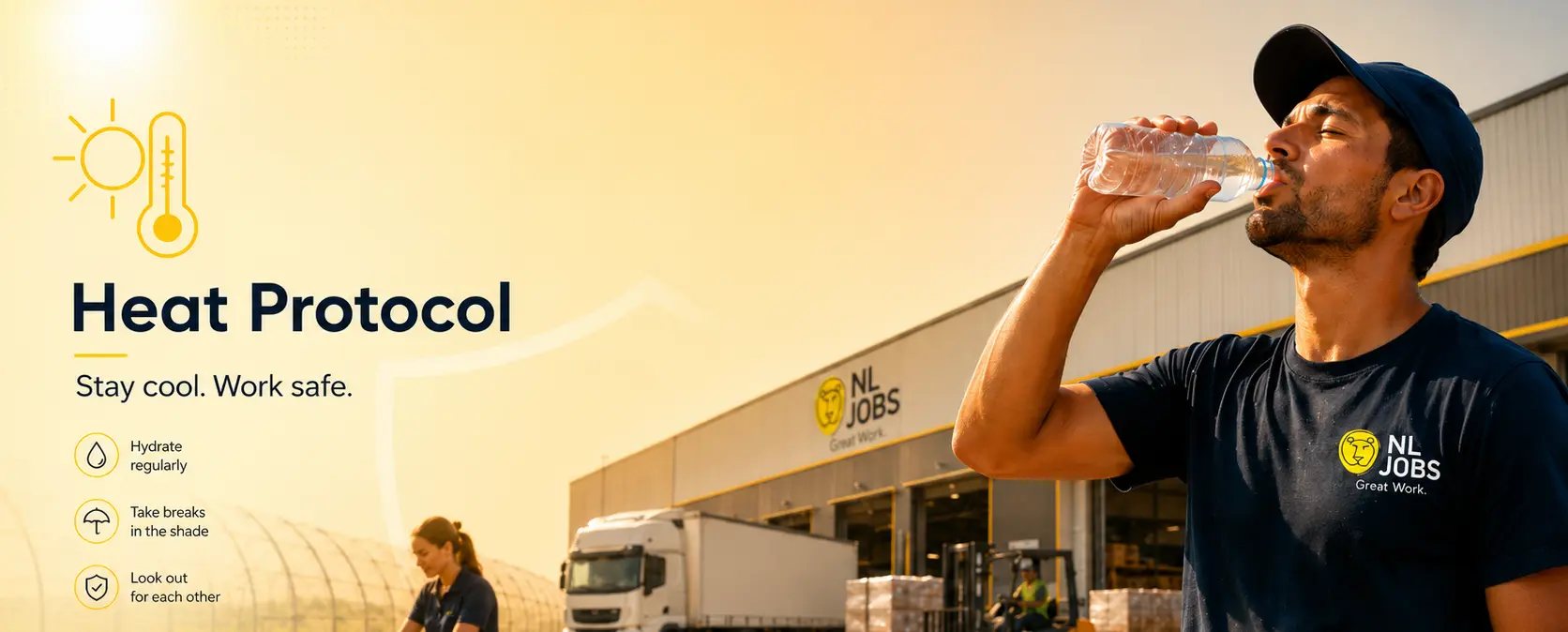
Heat Protocol
Heat Protocol
Working safely during hot weather
High temperatures can affect your health, concentration and safety at work. This Heat Protocol applies to NL Jobs employees working in greenhouses, warehouses, packing facilities, construction, logistics and outdoor locations.
Dutch occupational health rules do not set one general maximum workplace temperature. The risk depends on several factors, including temperature, humidity, direct sunlight, ventilation, physical workload, protective clothing and the length of exposure. When heat creates a health or safety risk, extra measures must be taken.
Emergency warning
Are you experiencing serious symptoms such as confusion, loss of balance, fainting or unconsciousness?
Stop work immediately, inform your supervisor or first-aid employee and call 112.
When does the Heat Protocol apply?
The Heat Protocol may be activated when:
-
high temperatures or official heat warnings are expected;
-
the workplace becomes excessively warm;
-
work is physically demanding in warm conditions;
-
ventilation is limited or humidity is high;
-
employees report heat-related symptoms;
-
the supervisor or client decides that extra precautions are needed.
Always follow the instructions of your supervisor, coordinator or the company where you work.
What employees should do
1. Drink enough water
Drink water regularly, even if you are not thirsty. Start your shift well hydrated, refill your bottle when needed and keep your water bottle with you when changing departments or work areas.
Avoid alcohol before and during work. Limit excessive coffee, caffeine and energy drinks.
Do not wait until you are extremely thirsty. Thirst, headache and dark urine can be signs that your body needs more fluids.
2. Keep cool where possible
Use ventilation, fans, shading or cooling systems where available. Spend breaks in a cooler or shaded area and report broken ventilation or cooling equipment immediately.
Where possible, doors or windows may be opened if this can be done safely. Blinds, screens or shading can help reduce direct sunlight.
3. Adjust the work
During very warm conditions, heavy work may need to be done during cooler hours. Work pace, tasks, break times or rotation may be adjusted.
Do not push yourself when you feel unwell. Heat can reduce concentration and increase the risk of mistakes and workplace accidents.
4. Wear suitable clothing
Wear light, dry and breathable clothing when this is allowed by workplace safety rules.
For outdoor work:
-
protect your head and skin from the sun;
-
use sunscreen;
-
seek shade during breaks where possible.
Required personal protective equipment must always be worn unless the supervisor gives different instructions. Never remove safety shoes, helmets, gloves, reflective clothing or other mandatory protection without permission.
Speak to your supervisor if protective clothing makes you feel excessively hot.
5. Eat light meals
Choose light and balanced meals during hot working days, such as fruit, vegetables, salads, sandwiches or yoghurt.
Very heavy meals can make you feel tired and uncomfortable during physical work.
6. Look out for each other
Pay attention to colleagues, especially during physically demanding work.
Report concerns if someone:
-
suddenly slows down;
-
looks confused;
-
makes unusual mistakes;
-
has difficulty walking;
-
feels dizzy;
-
has a headache;
-
complains about nausea;
-
looks extremely tired.
Never leave a person with serious heat-related symptoms alone.
Recognising heat-related problems
Stop working and report the situation if you experience:
-
strong thirst;
-
excessive sweating;
-
headache;
-
dizziness;
-
weakness or unusual tiredness;
-
nausea or vomiting;
-
muscle cramps;
-
difficulty concentrating;
-
reduced coordination;
-
making unusual mistakes;
-
feeling faint.
Heat exhaustion can become dangerous if it is not treated in time.
Emergency symptoms
Treat the situation as an emergency if someone:
-
becomes confused or unusually irritable;
-
is very drowsy or difficult to wake;
-
has problems with balance or coordination;
-
collapses or loses consciousness;
-
has very hot or red skin;
-
has seizures;
-
has difficulty breathing;
-
does not improve quickly after cooling and resting.
In these situations, call 112.
What to do when someone becomes unwell
-
Stop the work immediately.
-
Inform the supervisor or first-aid employee.
-
Move the person to a cool or shaded area.
-
Let the person sit or lie down.
-
Remove unnecessary outer clothing.
-
Cool the person with wet cloths, a fan or wrapped cold packs.
-
Offer water or an isotonic drink only if the person is fully awake and able to drink safely.
-
Stay with the person and monitor their condition.
-
Call 112 if the person is confused, uncoordinated, unconscious or does not improve quickly.
-
Follow the instructions of the emergency services.
Cooling can include wetting the skin, using a fan and placing wrapped cold packs around the neck, armpits or groin.
Do not return to work immediately
A person with heat-related symptoms should not return to physical work immediately.
The employee should first:
-
rest in a cool place;
-
drink fluids;
-
inform the supervisor;
-
make sure the symptoms have disappeared;
-
seek medical advice when symptoms remain, return or become worse.
Employees who may need extra protection
Some employees may be more sensitive to heat, including:
-
pregnant employees;
-
employees with heart or cardiovascular conditions;
-
employees using certain medicines;
-
employees with chronic health conditions;
-
employees who are not yet used to hot or physically demanding work.
Employees with health concerns should contact an occupational physician, doctor or pharmacist for confidential advice. Medicines may work differently during hot weather. Never change or stop medication without professional advice.
Extra attention by workplace
Greenhouses
Temperatures inside greenhouses can be higher than outside. Use ventilation and shading where available, rotate heavy tasks where possible and take breaks outside the hottest work zones.
During extreme heat, a tropenrooster may be introduced where possible to avoid the hottest hours of the day.
Warehouses and packing facilities
Use ventilation or cooling systems where available. Keep air circulation routes clear and avoid unnecessary exposure near heat-producing machinery.
Take breaks in a cooler designated area where possible.
Construction and outdoor work
Schedule heavy tasks during cooler hours where possible. Use shaded rest areas, protect exposed skin and take extra care when working at height, with tools or with machinery.
Heat can reduce concentration, which increases the risk of accidents.
Transport and driving
Take drinking water with you. Cool or ventilate the vehicle before driving and stop safely if you feel dizzy, extremely tired or unable to concentrate.
Never leave a person inside a parked vehicle during hot weather.
Responsibilities
Employees must:
-
follow the Heat Protocol and workplace instructions;
-
drink enough water;
-
use available breaks and cooling facilities;
-
report symptoms immediately;
-
look out for colleagues;
-
inform the supervisor about unsafe heat conditions.
Supervisors and workplace management should:
-
monitor workplace conditions;
-
ensure access to drinking water;
-
provide suitable break areas;
-
use ventilation, shading or cooling where possible;
-
adjust tasks, working times or break schedules when necessary;
-
consider a tropenrooster when heat makes standard working hours unsafe or unsuitable;
-
ensure that first-aid assistance is available;
-
explain heat measures clearly to employees.
Contact and reporting
make sure you know these numbers for your regio/company"
Supervisor or team leader.
First-aid employee / BHV.
Emergency services:
112
Important
This protocol provides general safety guidance. It does not replace workplace-specific instructions, the client’s health and safety procedures, the company’s Risk Inventory and Evaluation, applicable CAO agreements, advice from an occupational physician or professional medical assistance.
Stop working and report the situation whenever heat conditions may endanger your health or safety.
Stay cool. Stay safe. Together we keep NL Jobs strong.
